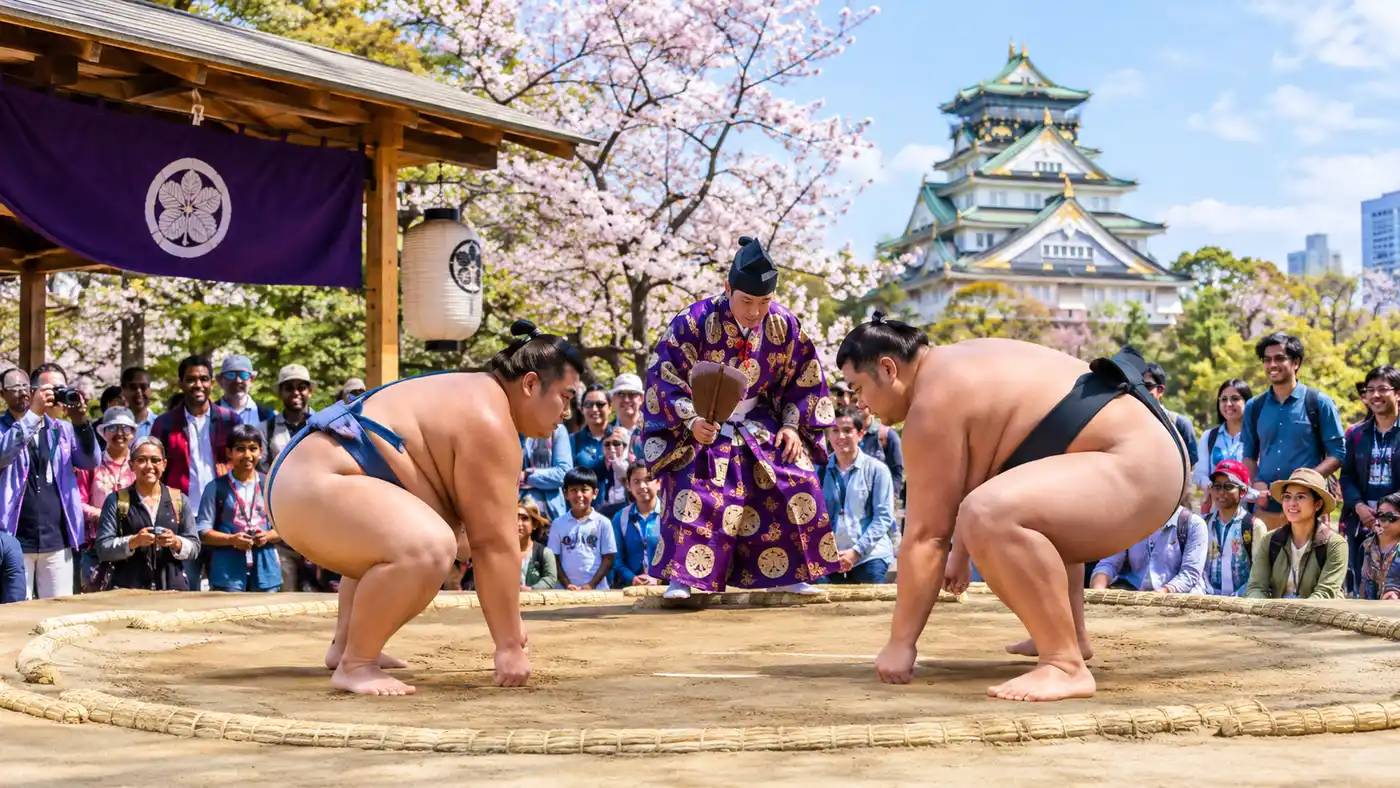
Sumo in Osaka Outside March: Off-Season Events and Experiences
Most travelers think that if they land at Kansai International Airport outside of mid-March, their chances of seeing giant wrestlers throw each other into the dirt are basically zero. It makes sense on the surface. The official Grand Sumo Tournament - the Haru Basho - packs into the city for just fifteen days each spring, and once the banners come down, the big names head right back to Tokyo. But if you dig a little deeper into the local calendar, tracking down authentic sumo events osaka offers during the other eleven months is entirely possible if you know where to look.
Sumo is not a museum piece locked away between tournaments. Professional wrestlers spend months traveling on regional tours, amateur university leagues run fierce tournaments right in the city suburbs, and retired rikishi host dining shows and ring sessions all year long. Whether you want to catch an autumn exhibition match, watch high-energy college heavyweight bouts, or step onto a real clay ring yourself, you have plenty of ways to scratch the itch.
Book your sumo wrestling osaka experience:
Jungyo Tours and the Autumn Sumo Exhibition Osaka Schedule
The Grand Sumo circuit runs six major tournaments a year, but the weeks between them are filled with jungyo. These are regional exhibition tours where the Japan Sumo Association takes the entire traveling circus of top-division wrestlers on the road. The wrestlers visit smaller cities, secondary gymnasiums, and regional arenas to meet local fans, sign autographs, and put on full-day displays. The atmosphere is completely different from an official tournament. Wrestlers joke around, hold practice matches where they openly coach younger talent, and perform comedic sumo routines called shokkiri that reveal the theatrical roots of the sport.
Osaka and the broader Kansai region routinely host jungyo stops in the autumn. Every October, the tour weaves through suburban sports centers across Osaka Prefecture. You will often see dates like the 10 19 Kadoma Osaka sumo stop or similar one-day events popping up in Sakai, Kishiwada, or nearby Wakayama. If you want to see a live sumo exhibition osaka style, these one-day events are unbeatable. The bouts do not count toward official ranking records, so the atmosphere is lighter and far more intimate than the pressure cooker of a Tokyo or March tournament.
Pro tip: Jungyo tickets go on sale two to three months beforehand through Japanese ticketing sites like Lawson Ticket, but local municipal gym box offices often sell great floor cushions directly over the counter with zero foreign markup.
Because the rikishi sleep in local hotels rather than closed stables during these tours, you might run into an active sekitori (a salaried top-division wrestler) grabbing an iced coffee at a convenience store down the block from the venue. Keep your camera ready, but be respectful and wait until they have their hands free before asking for a photograph.
The Off-Season Calendar: Month-by-Month Realities in Osaka
One of the most common questions travelers ask is simple: are there any sumo wrestling matches in september in osaka? The honest answer is no, at least not at the top professional tournament level. September is reserved for the Aki Basho at the Ryogoku Kokugikan in Tokyo. If you are hunting for sumo wrestling osaka september options, you will not find the grand tournament at EDION Arena Osaka, which sits quiet and hosts basketball or martial arts instead.
Planning around the calendar requires knowing where the rikishi actually are. Let us look at what is genuinely happening across the year so you do not waste an afternoon chasing phantom ticket sales.
| Month | Professional Circuit Location | Osaka Sumo Activity | Estimated Cost |
|---|---|---|---|
| January | Tokyo (Hatsu Basho) | Sports bars, amateur shrine training, chanko halls | Free to 4,500 yen |
| February | Tokyo (Retirement ceremonies) | Pre-tournament prep, stable arrivals late in month | Free to view |
| March | Osaka (Haru Basho) | Official grand tournament, daily morning practice | 3,800 to 15,000 yen |
| April to June | Tokyo (May Basho) & Spring Jungyo | Spring tours, university club bouts, tourist dojos | 2,000 to 11,000 yen |
| July | Nagoya (Nagoya Basho) | Day trip to Nagoya (50 mins on Shinkansen) | 4,000 yen + train fare |
| August | Summer Jungyo (Tohoku / Hokkaido) | Amateur leagues, interactive dining experiences | 5,000 to 12,000 yen |
| September | Tokyo (Aki Basho) | Live satellite screenings, hands-on classes | Varies widely |
| October | Autumn Jungyo (Kansai region) | One-day exhibition matches in Kadoma or Sakai | 6,000 to 13,000 yen |
| November | Fukuoka (Kyushu Basho) | Wrestlers transit through Kansai; local watch parties | Free to 5,000 yen |
| December | Winter Jungyo (Kyushu / Okinawa) | Year-end amateur championships, specialty chanko meals | Varies |
If you are landing for sumo wrestling osaka september 2025 or planning ahead for sumo wrestling osaka april 2026, your best bet for live professional bouts is catching a fast train to Tokyo or waiting for the October Kansai tour. Looking at sumo wrestling osaka may 2026 brings the exact same dynamic. The professional circuit moves in a strict, unyielding rhythm.
However, sumo osaka october is prime territory for suburban tours. When November rolls around for the Kyushu basho, teams pack their gear and take the Sanyo Shinkansen west. If you find yourself in town for sumo osaka november 2025 or sumo wrestling osaka november generally, you will see wrestlers passing through Shin-Osaka station in full traditional kimono, wooden geta sandals clicking against the slick floor tiles.
During sumo osaka december and sumo wrestling osaka december, things wind down into regional year-end tours in warmer southern prefectures. When sumo osaka january comes around, everyone is locked into Tokyo, followed by sumo wrestling osaka february when stables slowly begin renting out regional temples around Osaka to prepare for March.
What about summer? If you arrive during sumo wrestling osaka june, you are in a quiet training lull. But if you visit for sumo osaka july 2025 or any typical sumo wrestling osaka july stretch, you have a massive advantage: Nagoya. The Nagoya tournament runs for fifteen days in July, and Nagoya is only 50 minutes from Shin-Osaka on the Tokaido Shinkansen. It is an easy afternoon day trip. By sumo wrestling osaka august, the wrestlers head north toward Hokkaido to escape the humid heat.
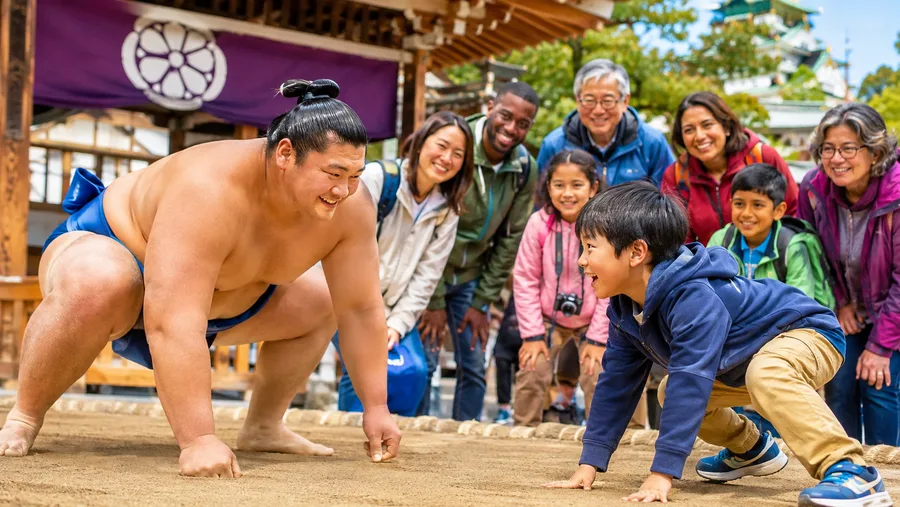
Hands-On Culture: Taking a Sumo Wrestling Class in Osaka Japan
Watching from plastic arena chairs is fine, but getting onto the sand yourself changes how you look at the sport. A growing number of retired wrestlers and cultural centers in Osaka now offer hands-on workshops. Booking a sumo wrestling class in osaka japan gives you direct access to techniques that look simple on television until you try them yourself.
Most of these sessions run out of modified dojos or entertainment halls near Namba and Shinsekai. You strip down to athletic shorts, wrap a canvas mawashi belt tightly over your clothes - which leaves intense red friction marks on your hips - and spend an hour learning the fundamentals. You learn the shiko leg stomps, the sliding footwork called suriashi, and the brutal collision drills known as butsukari-geiko.
Note: Authentic amateur rings use packed clay mixed with sand. It is hard as concrete underfoot. If you have bad knees or ankles, tell the instructor immediately before doing collision drills, because there is zero give in the floor.
These workshops are run by men who lived the grueling stable life for a decade or more. A retired sumo wrestler osaka resident might not speak fluent English, but they communicate with body language, physical cues, and good-natured humor. You will get tossed onto a padded mat or into the ring edge, and you will quickly realize that an average professional rikishi has leg muscles like solid oak beams.
If you want to dive into these experiences, keep a few practical points in mind:
- Dress code: Wear tight athletic compression shorts or leggings under the canvas belt so the rough fabric does not scrape your skin.
- Fitness level: Moderate flexibility helps, but instructors tailor the pushing drills to whatever your back and joints can handle.
- Meal inclusion: Many classes finish with a big communal bowl of chanko nabe, the calorie-dense chicken and vegetable stew that fuels stable life.
- Advance booking: Most interactive dojos only take 8 to 12 people per session, so reserve at least three weeks ahead during peak tourist months.
Book your sumo wrestling osaka experience:
Where to Catch Sumo Today Osaka: Day Trips and Live Broadcast Gatherings
If you are walking around Dotonbori right now thinking, "I want to watch sumo today osaka," and it happens to be during an active tournament month in Tokyo, Nagoya, or Fukuoka, you still have great social options. Watching sumo wrestling osaka today does not have to mean squinting at your smartphone screen in a hotel room.
During the fifteen-day grand basho runs in January, May, July, September, and November, local chanko restaurants owned by retired wrestlers turn their dining rooms into rowdy screening spots. Head over to the Minami district or the quieter alleys around Tennoji. Spots run by former stable masters always have the official NHK broadcast running on large screens near the counter.
The local patrons know their stuff. When a Kansai-born wrestler like Ura steps up to the clay, the whole room stops chewing. If you want to track exact match dates and start times so you show up at the pub right when the top division fights begin, check our breakdown of the Osaka Sumo Tournament Schedule, Dates, and Bout Times. The top division bouts always start around 3:45 PM and wrap up right at 6:00 PM sharp.
For an authentic off-season sumo competition osaka experience, keep an eye on amateur leagues. The Kansai Student Sumo Federation hosts university matches at local campus rings throughout the late spring and early autumn. Kindai University, located in Higashiosaka, has one of the fiercest amateur sumo programs in the country. Their campus tournaments are usually free to enter, completely devoid of tourist buses, and feature elite 20-year-olds who hit each other with terrifying force.
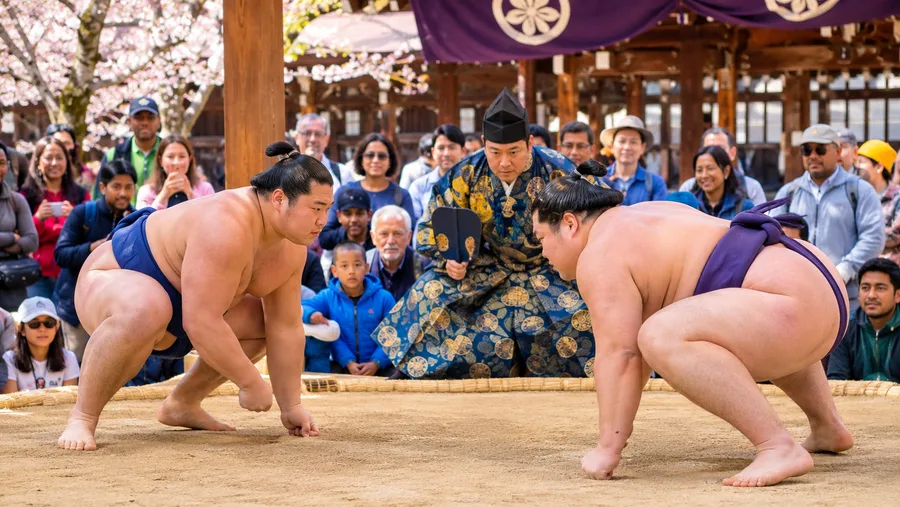
Amateur Rings and Stable Culture Around Kansai
Sumo has a spiritual home in Osaka that predates modern stadium tours by centuries. Long before the modern Osaka Sumo Association merged into the national body in Tokyo back in the 1920s, Osaka ran its own fierce, independent sumo circuit. That history is buried right in the middle of local neighborhood shrines.
Sumiyoshi Taisha, the grand shrine in the southern part of the city, has deep historic ties to traditional ring rituals. Every year, sacred ceremonies are performed on the grounds that recall the ritual harvest roots of the sport. The shrine ring is open to the elements, ringed by towering cedar trees and stone lanterns. Walking the gravel paths there gives you an eerie sense of how quiet the sport was before brass bands, plastic stadium seats, and microphone systems took over.
If you want to catch amateur ring training or local youth club sessions around the city, these pointers will help you navigate the scene without stepping on toes:
- Arrive silently: If you find a shrine or university ring during a morning practice session, bow slightly upon entering the seating area and avoid talking loudly.
- Never step on the dohyo: The sacred ring is purified with salt and strictly off-limits to spectators wearing street shoes.
- Check university schedules: The Kansai collegiate sumo calendar runs from May through October, with matches held at suburban campuses in Osaka and Kyoto.
- Cash only for community events: Local amateur tournaments rarely take cards for programs, drinks, or small donation boxes at the gate.
It takes a little extra footwork to uncover these experiences, but honestly, seeing college heavyweights smash into each other on a breezy Sunday morning in Higashiosaka feels far more personal than sitting in the upper nosebleeds of an 8,000-seat arena.
Frequently Asked Questions about sumo events osaka
Are there any sumo wrestling matches in September in Osaka?
No official Grand Sumo tournaments take place in Osaka during September. The main September tournament (Aki Basho) is held exclusively at the Kokugikan in Tokyo. However, you can watch live broadcasts in local chanko restaurants, attend amateur college bouts, or join interactive dojo workshops in the city.
Can you visit sumo stables in Osaka during the off-season?
Professional sumo stables are based permanently in Tokyo. Stables only move to Osaka temporarily for about four weeks around the March tournament, setting up temporary training quarters in local temples and gymnasiums. Outside of late February and March, there are no active professional stables operating in Osaka.
What is the best alternative if I visit Osaka in July?
Take the Tokaido Shinkansen to Nagoya. The official July Grand Sumo Tournament runs for fifteen days at Dolphins Arena in Nagoya, which is only 50 minutes away by bullet train from Shin-Osaka Station. It makes an easy, world-class day trip for wrestling fans.
Quick Reference
- Grand Sumo is in Osaka only during March
- Suburban exhibition tours (Jungyo) usually visit Osaka in October
- Nagoya tournament is an easy 50-minute day trip in July
- Hands-on workshops and chanko dining run year-round in Namba
Book your sumo wrestling osaka experience:
My Take: Do Not Skip Sumo Just Because It Is Not March
Too many visitors cross sumo off their Japan bucket list the moment they realize their trip falls outside the March tournament window. That is a mistake. Off-season travel gives you something the grand basho cannot offer: genuine proximity. In March, you are one face in a crowd of thousands, squinting down from the second balcony at wrestlers who vanish into private dressing rooms the second their bout ends. In October at a suburban exhibition, or in August at a tiny training dojo tucked behind a train track in Namba, you can hear the sand grind under their toes, smell the sweet bintsuke hair wax, and actually speak with the athletes. If you are anywhere near Osaka between April and February, leave an afternoon open on your itinerary and go find the real thing.
Read more about sumo wrestling osaka.